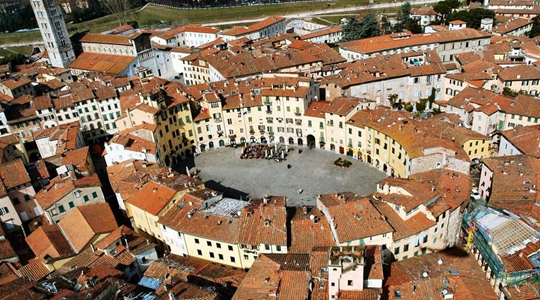
Aerial view of Piazza dell’Anfiteatro, the spectacular oval heart of Lucca's historic center.
Lucca is a cozy and livable Tuscan gem, world-famous for its perfectly preserved Renaissance walls, its pedestrian-only historic center, and a rich gastronomic tradition that delights every visitor.
The origins of Lucca date back to Roman times: the layout of the historic center still preserves the ancient colony's grid plan. Today's Piazza San Michele stands exactly where the Roman forum once thrived.
During the Middle Ages and Renaissance, Lucca was a wealthy independent city-state, prospering through the silk trade. To protect its immense wealth, the city built its massive system of bastioned walls between the 16th and 19th centuries.
Once their military purpose ended, the walls were transformed into an elevated, tree-lined park. Today, they form a stunning green ring around the city, offering one of the most beautiful promenades in Europe.
The walls form a 4-kilometer loop, wide enough for cycling, jogging, or a leisurely sunset walk. It is the perfect spot to admire the city's gardens and towers from an elevated perspective.
Built on the ruins of a 2nd-century Roman amphitheater, this elliptical square is unique in the world. The buildings follow the original arena's curve, creating a cozy space filled with traditional outdoor cafes.
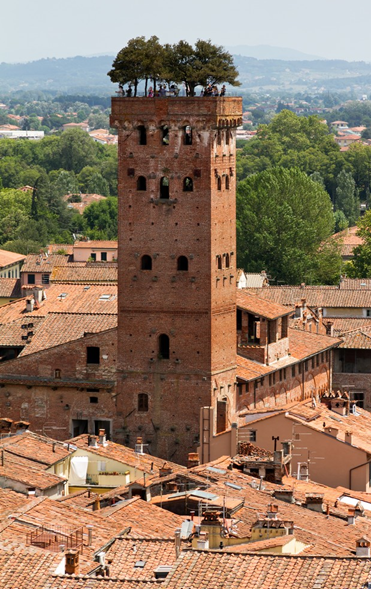
A symbol of the city, this medieval brick tower is topped by live oak trees. The 232-step climb rewarded you with a breathtaking panoramic view over Lucca’s red-tiled rooftops and the Tuscan hills.
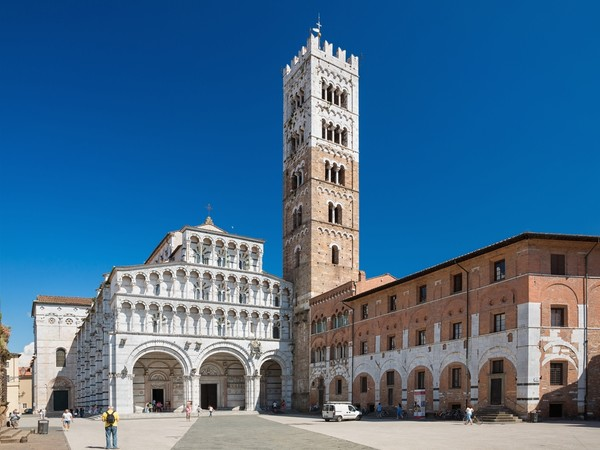
The Cathedral is a masterpiece of Lucchese Romanesque style. Inside, you can admire the "Volto Santo" (Holy Face), a sacred wooden crucifix, and the exquisite tomb of Ilaria del Carretto by Jacopo della Quercia.
Known as the "City of 100 Churches," Lucca boasts gems like San Michele in Foro and the Basilica of San Frediano with its golden mosaic. Stroll down **Via Fillungo**, the main shopping street, to experience the local lifestyle.
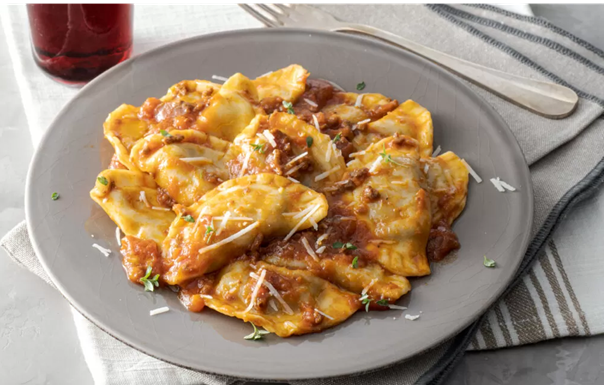
Lucchese food is honest and flavorful "cucina povera" (rural cuisine), highlighting local Extra Virgin Olive Oil, spelt (farro), and seasonal ingredients from the surrounding countryside.
Not to be confused with tortellini, Tordelli are large ravioli filled with meat, bread, and herbs, served with a hearty meat ragù. A must-try for any pasta lover visiting Lucca.
Spelt from the nearby Garfagnana mountains is the star of this thick, comforting soup. It's a healthy and traditional dish, perfect when drizzled with raw Lucchese olive oil.
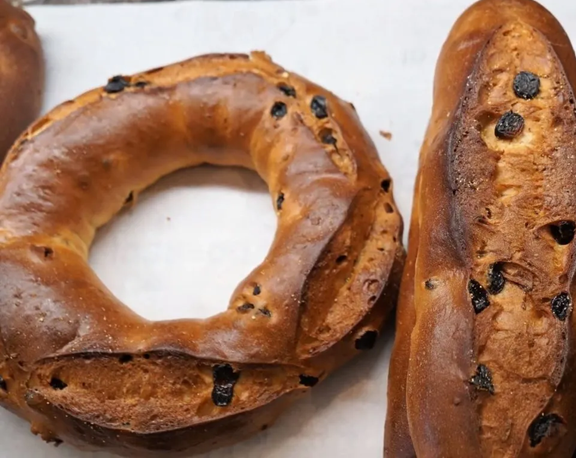
"Whoever comes to Lucca and doesn't eat Buccellato, is like they've never been here." This sweet raisin and anise bread is the city's most famous dessert, perfect with a glass of Vin Santo.